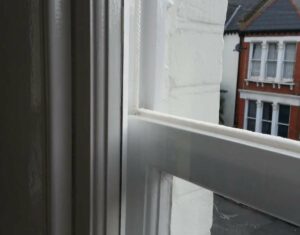
If you are considering sash-window repair, you may recognise the symptom — a broken cord, cracked pane, rotten sill or sticking sash — but still wonder how the work will be organised. Will the sash be removed, will scaffolding be required and how long will the repair take?
The process depends on the window’s condition, position and agreed scope. The outline below explains the usual stages; a survey should provide a more precise picture for your property.
Quick answer: what happens during sash window repair?
Most projects follow a similar sequence, although a focused repair may not require every stage.
- Inspection and confirmation of the required work
- Preparation and protection of the working area
- Internal removal of the sashes, where appropriate
- Cleaning and preparation of retained material
- Mechanical, glazing or timber repair, followed by refitting
- Adjustment, final checks and cleaning of the working area
Several stages may be brief for a simple cord replacement. Timber decay, failed glazing, heavy paint build-up or difficult access can add work at more than one point.
The survey determines the real scope of work
The survey establishes the practical scope of the repair. A specialist will assess the reported problem, movement, balance and the condition of cords, weights, pulleys, beads, glazing and visible timber. The box, frame and sill should also be considered, together with access.
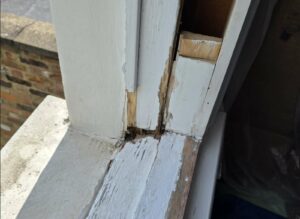
Surface appearance does not always reveal the full condition. Paint or closed joints can conceal local defects, as Repair A Sash’s guide to hidden rot in sash windows explains. Concealed damage will not necessarily be found, but this is one reason the survey and preparation stages matter.
Repair or draught proofing and renovation?
Not every sash-window problem requires structural or mechanical repair. A window that is broadly sound but draughty, rattling or slightly stiff may instead need draught proofing and lighter renovation, including easing and adjustment or new staff and parting beads with integrated draught seals.
| Typical condition or problem | More likely service | Why |
| Broken sash cord or failed pulley | Repair | A mechanical component has failed |
| Localised timber decay or damaged sill | Repair | Defective timber needs repair or replacement |
| Cracked or broken pane | Repair | Glazing work is required |
| Sound but draughty or rattling window | Draught proofing and renovation | Sealing and fit are the main concerns |
| Minor sticking, worn or poorly fitted beads | Draught proofing and renovation | Lighter adjustment and new beads may be suitable |
| Several overlapping defects | Survey required | The project may involve both services |
This is a starting point, not a diagnosis. The right route becomes clear only after inspection.
Preparing the room and working area
Before work begins, access to the rooms should be agreed and the sill and immediate area cleared. Fragile or valuable items are normally moved away, leaving enough space to remove and handle the sashes safely.
The contractor should explain how floors and nearby furniture will be protected and how debris from cleaning, paint removal or sanding will be managed. Restricted access or a finish requiring particular care should be discussed in advance. Protection will depend on the room and scope rather than one fixed method for every property.
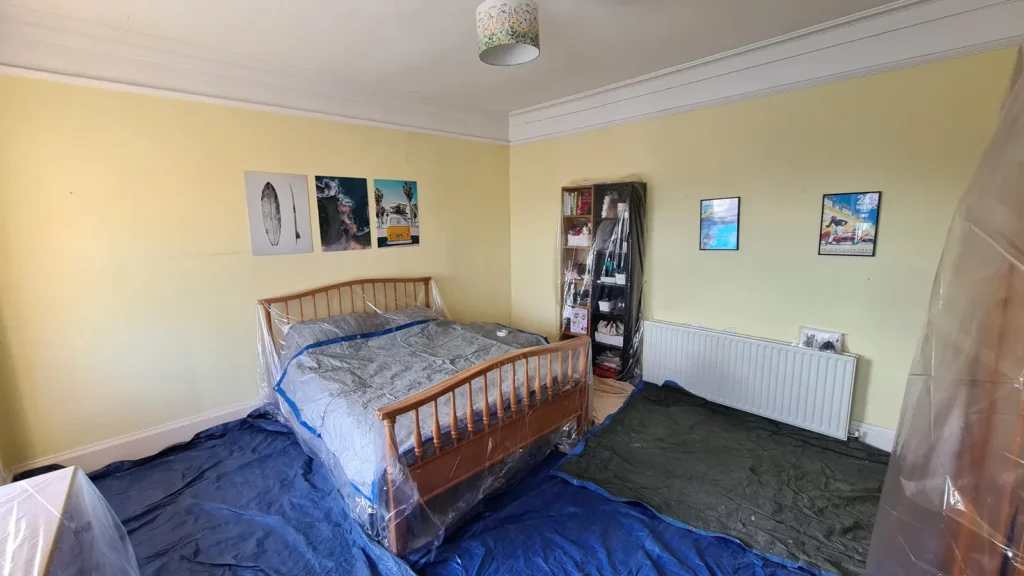
REPAIR A SASH PREPARATION NOTE
Ask what needs to be moved before the team arrives and what protection the contractor will provide. A clear route and working area help the sashes to be removed and handled safely.
Can most of the work be completed from inside?
Traditional sash windows are designed to be serviceable. Many repairs can be organised from inside because the sashes can usually be removed internally. This may provide access for cord and weight work, pulleys and beads, certain glazing and joinery repairs, and general cleaning and preparation.
The exact method still depends on the window, its position and the surrounding finishes. Internal removal of the sashes does not mean that every part of the outer frame or sill can be reached safely from the room.
When might scaffolding or external access be required?
A window being above ground-floor level does not automatically mean scaffolding will be needed. Access should be assessed for each elevation and work package rather than assumed purely from the floor level.
Scaffolding or another suitable external access or protection system may still be required where an external section cannot be reached safely, where repairs affect inaccessible areas of the outer frame or sill, or where substantial external preparation is needed. Dormer and roof-level windows can present different access requirements. Protection may also be necessary where people pass below the working area, particularly above a busy pavement. The contractor responsible for the work should assess and select the appropriate method.
Why preparation can take longer than expected
The visible repair is only one part of the job. Retained sash boxes and surrounding timber may first need cleaning, removal of loose or failed paint, sanding and final preparation. Paint build-up may restrict movement and conceal edges or joints that need inspection.
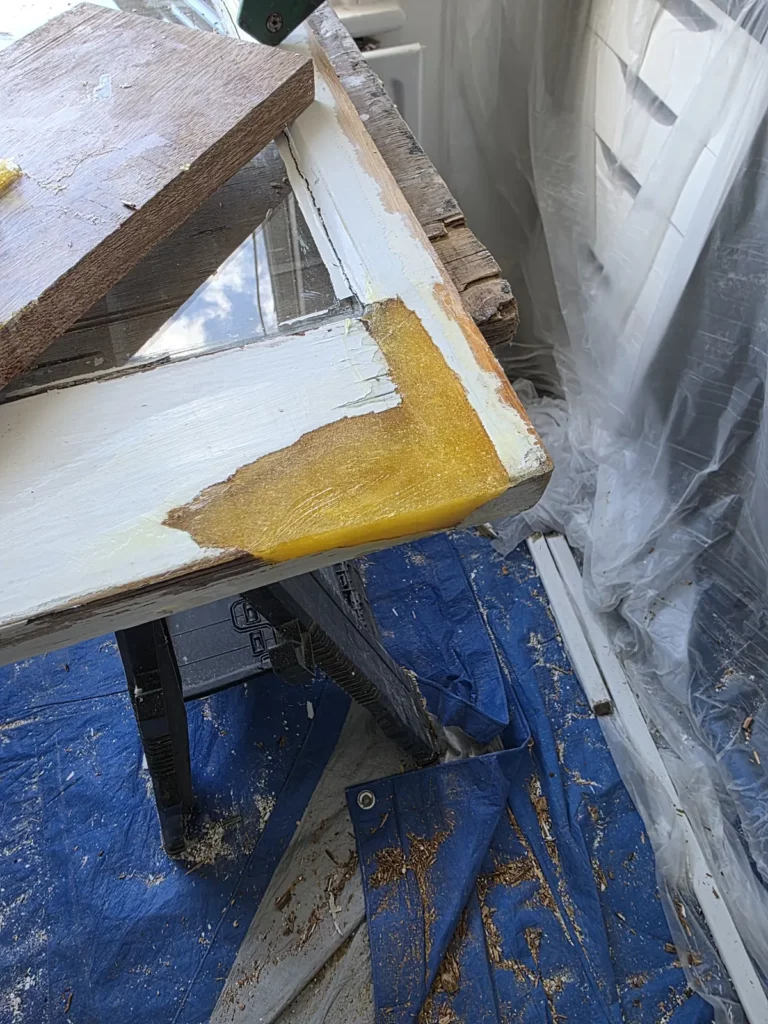
This stage may take longer than fitting or reassembling repaired components. It is part of the repair rather than an optional preliminary task: rushing it can leave movement problems or unsound material unresolved.
Removing the sashes or cleaning back failed coatings may reveal a defect that could not be confirmed from the surface. If it affects the agreed scope, the finding and any additional work should be explained before work proceeds beyond the quotation.
What happens during the repair itself?
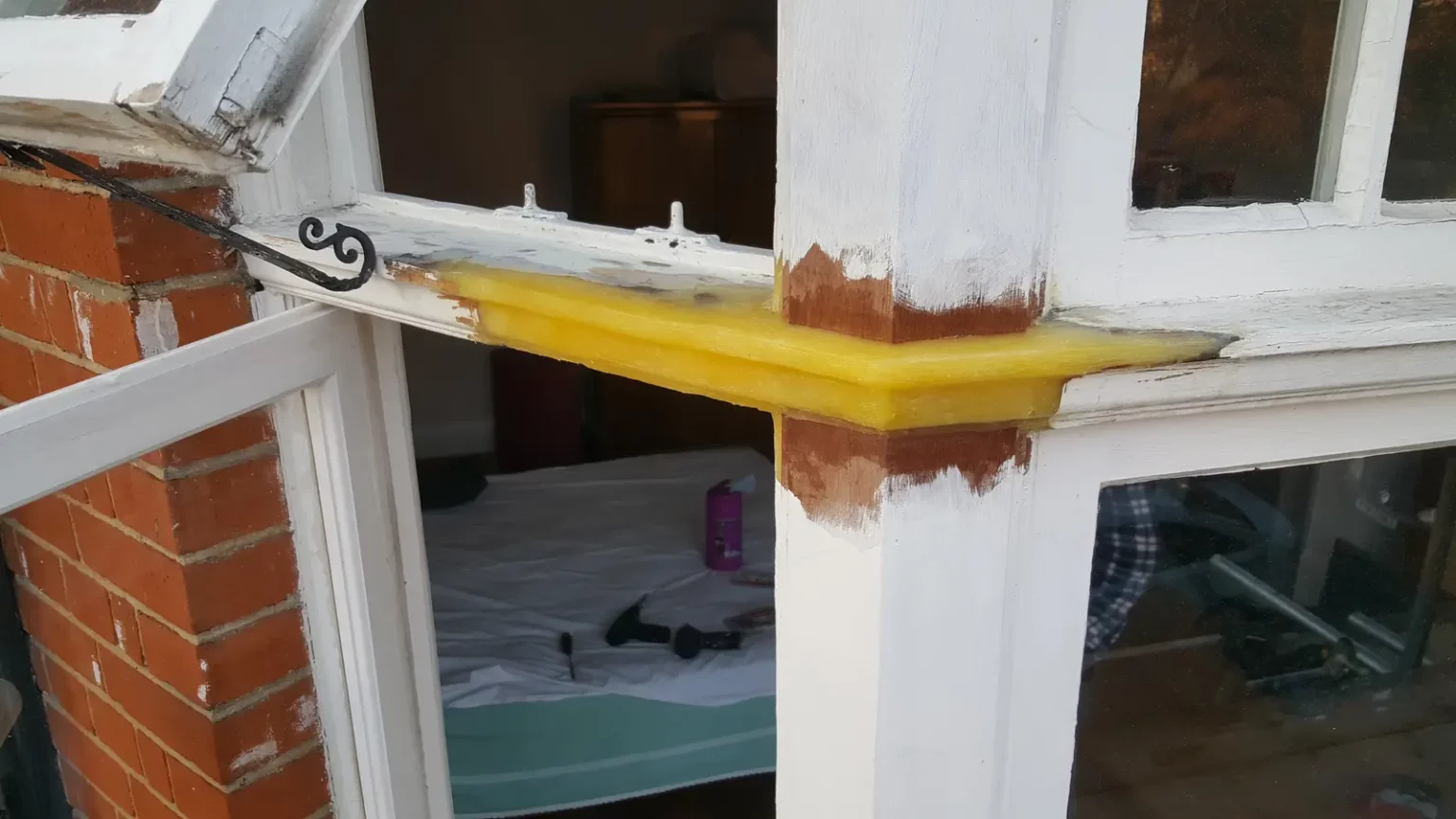
Depending on the diagnosis, sash window repair may involve cord replacement and rebalancing, pulley or weight work, localised timber repair, replacement of damaged sill, frame or sash sections, glazing, hardware, easing or adjustment. A single mechanical fault requires a different programme from a window with decay, damaged glass and wear across several components.
Refitting, testing and cleaning
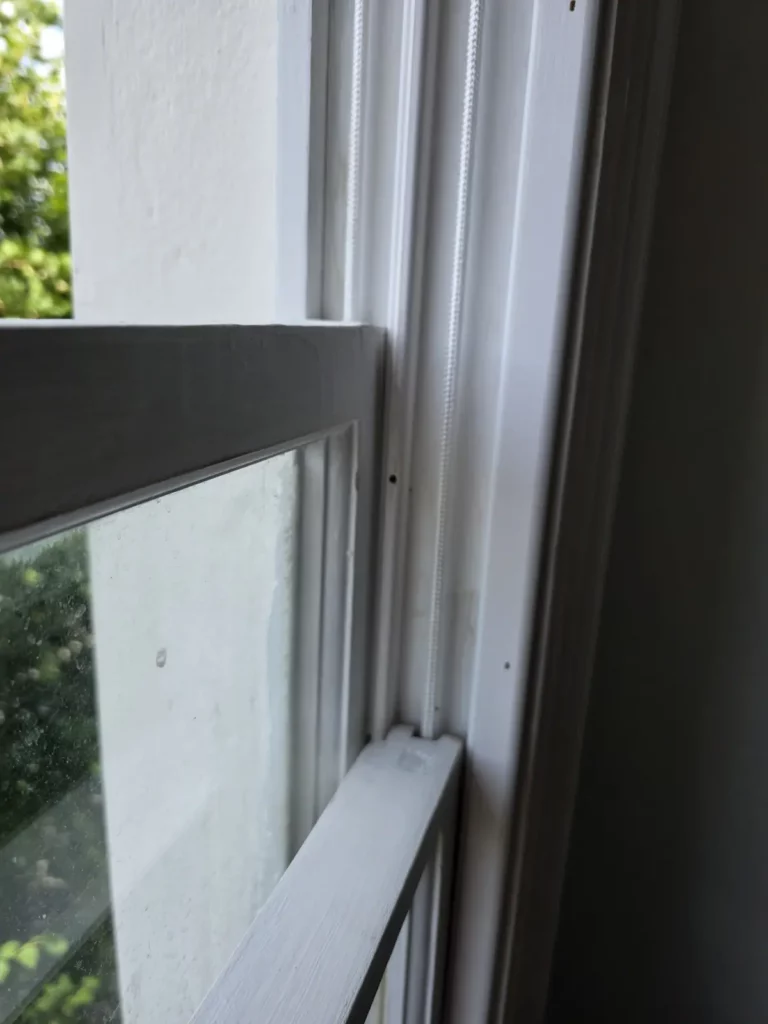
Once the repair is complete, the window is refitted and checked for smooth movement, correct balance and secure glazing. The fit between the sashes and beads, the operation of locks and fasteners, and any remaining sticking or alignment issue should also be checked.
The protection is then removed and the working area cleaned according to the agreed scope. Temporary noise, dust and restricted access around the window should still be expected while preparation and repair are underway.
How long does sash window repair take?
There is no reliable universal timeframe. A focused cord replacement or isolated single-pane glazing repair may sometimes be completed within a day. More substantial timber work, extensive preparation, difficult access or repairs across several windows will take longer.
The main variables include:
- the number, size and design of the windows;
- their location and whether internal or external access is needed;
- the amount of paint build-up and preparation required;
- the extent and position of timber decay or glazing damage;
- whether matching components need to be sourced or made; and
- what becomes visible after the sashes or failed coatings are removed.
Active working time on one window is also different from the calendar duration of a larger project, as several windows may be organised in sequence. A realistic programme should therefore come from the survey and quotation rather than a generic per-window figure.
How disruptive is the work?
Because much of the work is often organised from inside, sash-window repair may be less disruptive than homeowners expect. Even so, the team needs clear working space, and preparation can create noise, dust and temporary restrictions around the window. Agreeing room access, protection and the sequence of work in advance helps keep the project manageable.
Questions to ask before work starts
- What defects were found, and does the project require repair, renovation or both?
- Which parts of the work will take place inside, and is external access or protection required?
- What should be moved, and how will floors and nearby furniture be protected?
- Does the quoted timeframe cover one window, one room or the complete project?
- What could change after the sashes are removed or old coatings are cleaned back?
- What finishing, final checks and cleaning are included?
Book a free sash-window survey in London
Every sash window and property is different. A Repair A Sash survey can confirm the repair requirements, whether the work falls under repair or lighter renovation, the access and protection needed, and a realistic project-specific timeframe. Contact Repair A Sash to arrange a free survey and quotation in London.
Frequently asked questions about the sash-window repair process
Yes, in many cases. The sashes can often be removed internally, providing access for cord, bead, glazing and joinery work. External access may still be needed for parts of the outer frame or sill, depending on the window and the agreed repair.
No. An upper-floor position does not automatically require scaffolding because much of the work may be organised from inside. External access or protection becomes more likely where an area cannot be reached safely or where people pass below the work zone.
Agree access with the contractor, clear the sill and immediate working area, and move fragile or valuable items. The contractor should explain how floors and nearby furniture will be protected and how dust or debris will be managed.
It depends on the defect and preparation required. A focused cord or single-pane glazing repair may sometimes be completed within a day, while timber repair, difficult access or several interacting defects will take longer. The survey and quotation should give the relevant timeframe.
They expose the retained timber and prepare it for a sound repair or finish. Paint build-up can also restrict movement or conceal joints and local defects, so careful cleaning and preparation may take a substantial part of the programme.
Repair addresses mechanical, glazing or timber defects such as broken cords, damaged glass, decay or failed joints. Draught proofing and lighter renovation suit a broadly sound window that needs easing, adjustment, new beads with integrated seals or better fitting. Some projects involve both.
Reviewed by and sources
Prepared for technical review by: Borislav Čakarević, Repair A Sash
Editorial preparation: Prepared from Repair A Sash’s technical material and service information, with independent maintenance and safety references listed below.
Last updated: 16 September 2026.