A quote for timber windows or doors may offer engineered redwood, Accoya, Red Grandis or oak. The choice affects the appearance of the joinery, how it behaves outdoors and the work needed to keep it in good condition.
At Repair A Sash, we look at the opening, its exposure, the finish you want and your budget before recommending a timber. Access matters too. A window that needs scaffolding for repainting presents a different maintenance decision from a ground-floor door you can reach easily.
The material name is a useful starting point. To compare quotes properly, you also need to understand how the timber is prepared and how the finished window or door is made.
Which timber should you choose
- Engineered redwood: A practical option for painted windows and doors, provided the timber is properly selected, dried and protected for external use.
- Accoya: Worth considering for exposed openings or windows that are difficult to reach for maintenance, because of its dimensional stability and resistance to fungal decay.
- Red Grandis: A hardwood option to compare for painted joinery.
- Oak: Worth considering when you want visible grain, or when the quoted premium over Red Grandis is modest.
The right choice depends on the opening, exposure, finish and budget. Compare the price of the finished joinery, including glazing, hardware, coating and installation.
Understanding the timber terms
Softwood and hardwood describe broad groups of trees. They do not rank timber by hardness, quality or suitability for outdoor use. Redwood is a softwood; oak and Red Grandis are hardwoods.
Engineered describes construction. Finger-jointing joins shorter pieces end to end, allowing selected timber to be used in longer components. Laminating bonds layers together to form a larger section. A component can use either method or both, so it is worth asking what an “engineered” specification actually includes.
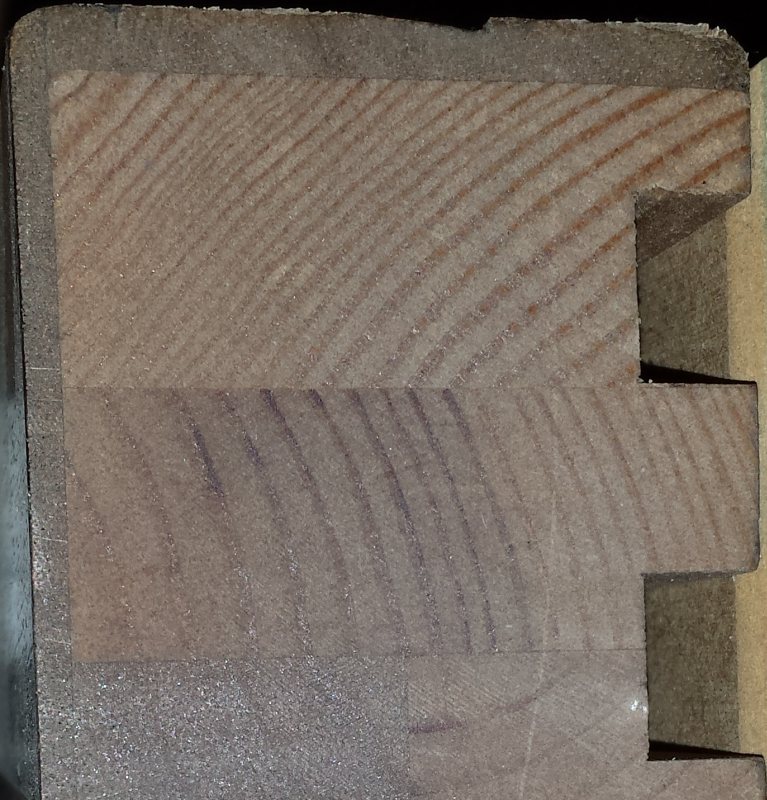
Accoya is radiata pine modified through acetylation, a treatment that changes the wood’s response to moisture throughout the material. It remains a modified softwood, even though it is often compared with hardwoods for external joinery.
Engineered redwood for painted windows and doors
Borislav’s experience with engineered softwood explains its appeal for painted joinery. Selecting timber and cutting out unwanted sections before finger-jointing can reduce problems associated with knots and resin. Finger-jointing can help reduce bowing and twisting, but the timber still needs to be properly dried and prepared.
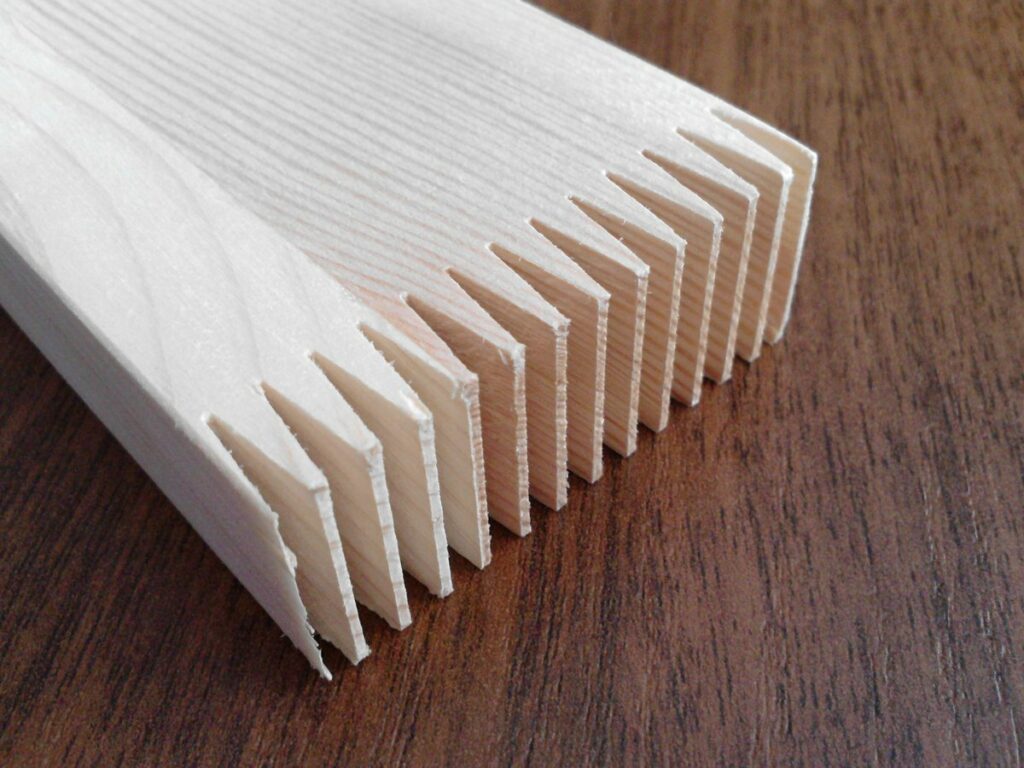
For painted joinery, ask how the supplier selects the timber and prepares the components for coating.
Engineered construction does not establish resistance to decay. For external joinery, the timber needs appropriate protection and detailing. As the USDA Wood Handbook explains, coatings slow the exchange of moisture between wood and its surroundings; correct drying and handling help limit unwanted dimensional changes.
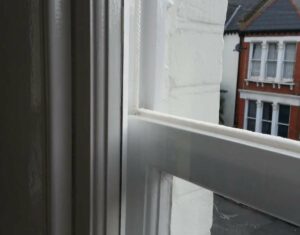
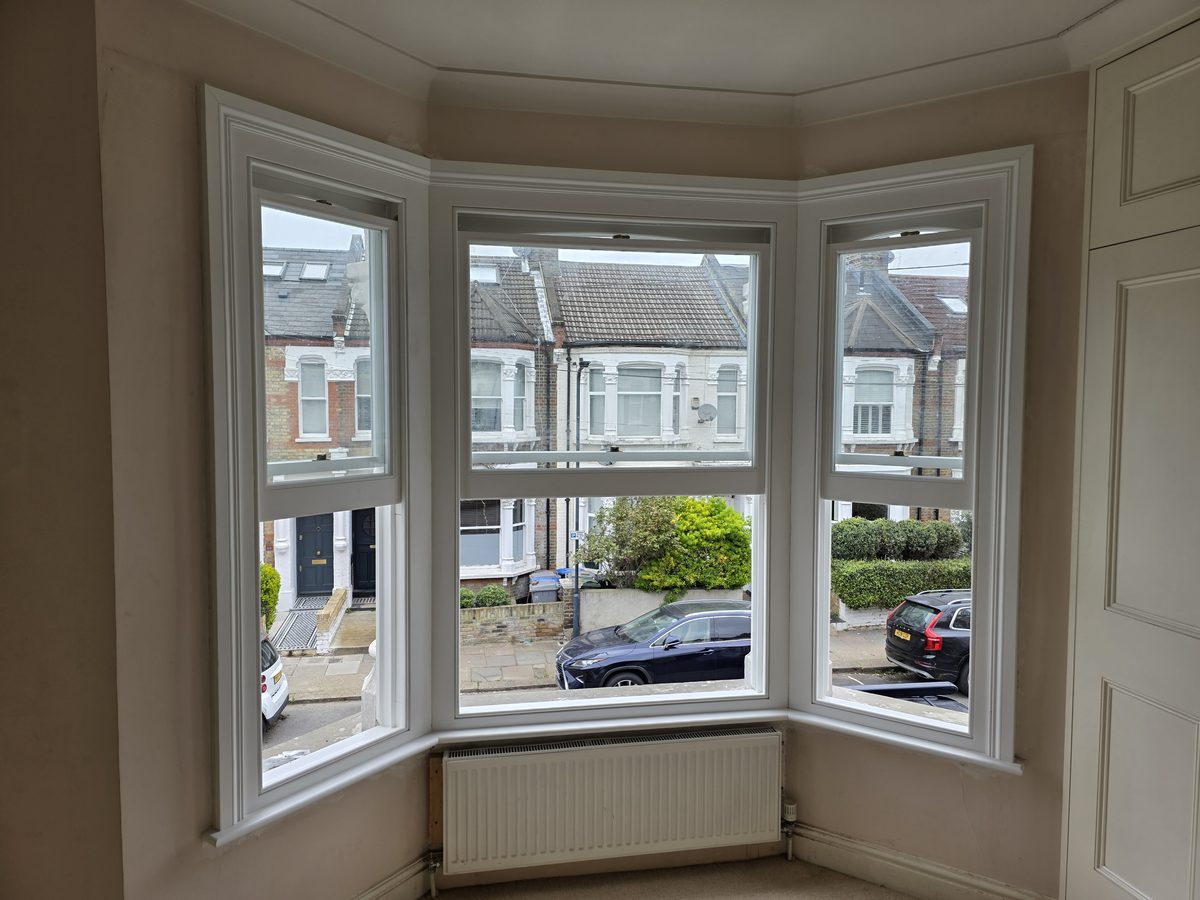
For new sash windows, ask which timber will be used in the sashes and frame, and how those components will be coated. The same assessment applies to casement windows and doors.
Accoya for exposed or difficult to reach joinery
Acetylation reduces Accoya’s moisture uptake and improves its dimensional stability. Accoya is classified as durability Class 1, the highest class for resistance to fungal decay. These qualities make it worth considering for external joinery where exposure and future maintenance are important.
Borislav gives a practical example: windows higher up a building can face substantial wind and rain, while checking the finish or repainting may require scaffolding. In those circumstances, he may recommend Accoya. Include the cost of scaffolding or other access equipment when comparing the options.
Accoya still needs care. Inspect the coating, clean the joinery and repair damage according to the coating system’s guidance. The manufacturer’s care and maintenance guide recommends annual inspection and cleaning; that is not an instruction to repaint every year. Our guide to how long timber sash windows last explains the role of ongoing maintenance.
Accoya advertises a 50-year warranty against fungal decay for the wood in above-ground use, subject to its terms. Check the separate guarantees for the finished joinery and coating. The wood warranty does not tell you how long a painted surface will last before it needs attention.
Choosing between Red Grandis and oak
Red Grandis is one of the hardwood options we offer. Its relatively even grain makes it a useful option to discuss for painted joinery. Ask what grade and construction are being quoted, and how the timber is dried and finished.
Oak has a more pronounced grain, which may be a reason to choose it when you want the timber visible under a suitable clear or tinted finish. It can also be painted. Oak can present drying difficulties, so drying and preparation need particular attention for external use.
Borislav explains that he sometimes recommends oak when the additional cost over Red Grandis is small. The price difference varies by project, so compare both options against the same specification.
Timber options at a glance
| Timber | Why consider it | What to check in the quote |
| Engineered redwood | A practical option for painted joinery; selected and jointed components can reduce defects and movement. | Finger-jointed, laminated or both; timber selection, drying, external protection and coating. |
| Accoya | Dimensional stability and resistance to fungal decay; worth considering where access for maintenance is difficult. | Which components use Accoya, the coating system, access needs and the separate warranty terms. |
| Red Grandis | A hardwood option with relatively even grain for a painted finish. | Grade, component construction, drying and the complete price against the alternatives. |
| Oak | Pronounced grain for a visible timber finish; sometimes a modest quoted premium over Red Grandis. | Timber grade, drying, finish and the actual price difference for your specification. |
Why timber stability matters for doors
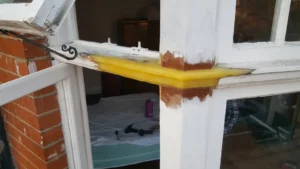
A hinged door has a free edge opposite its hinges. If the door distorts, that edge can move out of alignment with the frame, affecting closing, latching and the fit of the seals. Borislav highlights this when discussing timber that has not been dried or prepared properly.
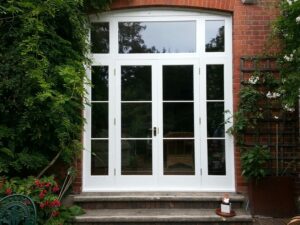
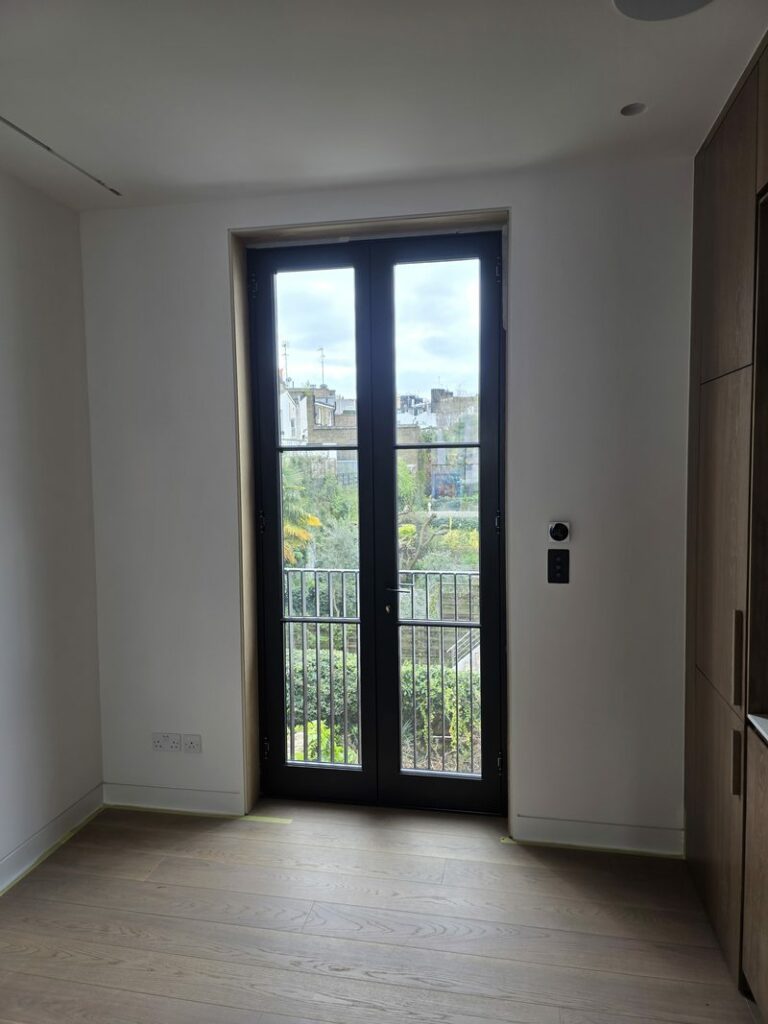
When choosing a timber front door or French doors, ask how the timber has been dried and how the door is constructed. The hardware, coating and installation also affect how the finished door performs. Windows can also suffer from timber movement, so these checks apply across external joinery.
Our guide to why timber doors warp explains the causes of movement and the checks needed before deciding on adjustment, repair or replacement.
What to check before accepting a quote
If two quotations differ substantially, check whether they include the same glazing, factory finishing and installation work. Ask for an alternative quotation using the other timber with those details unchanged, so you can assess the material upgrade against your budget.
- Confirm the timber and component construction. Ask whether the components are made from single pieces of timber, finger-jointed sections, laminated sections or a combination, and whether the same material is used throughout.
- Ask about drying and suitability for external use. The answer should cover the proposed timber’s preparation and protection.
- Specify the finish. Agree the coating system, colour or visible timber finish, and what maintenance guidance you will receive.
- Include access in the budget. Consider how future inspections and repainting would be carried out, especially above ground level.
- Compare complete quotations. Check glazing, hardware, installation and finishing so that a material upgrade is priced against equivalent work.
- Read the guarantees. Establish what covers the timber, finished joinery and coating, and which conditions apply.
For a listed building or a property in a conservation area, check the restrictions and any required consent before finalising the specification or ordering work.
Discuss the options for your property
Tell us which windows or doors you want to replace, the finish you prefer and your budget. We can assess the openings and explain which timber options suit your property. Contact Repair A Sash to discuss your project.
Frequently asked questions about timber for windows and doors
Accoya is modified radiata pine, a softwood. Acetylation changes its response to moisture and improves durability; it does not change its botanical classification.
Yes. Engineered timber uses real wood joined into components. Finger-jointing joins pieces end to end, while laminating bonds layers together.
No. The hardwood label alone does not establish suitability for external joinery. Compare the species, grade, drying, construction and finish, together with the conditions the joinery will face.
Painted Accoya joinery will need its coating maintained and renewed when required. The timing depends on the coating system, exposure and condition. Annual inspection does not mean annual repainting.
The price difference varies by project. Borislav sometimes recommends oak when the quoted premium over Red Grandis is small. Compare both prices against the same specification.
The advertised above-ground warranty concerns fungal decay of the Accoya wood, subject to the applicable terms. Check those terms alongside the guarantees for the finished joinery and coating.
Reviewed by and sources
Reviewed by: Borislav Čakarević, Repair A Sash
Last updated: 13 October 2026.
Independent references:
- USDA Forest Products Laboratory — Wood Handbook: Drying and control of moisture content and dimensional changes
- Timber Development UK — European oak
Manufacturer and supplier references:
- International Timber — Finger-jointed redwood and laminated redwood
- Accoya — Wood Information Guide, testing and warranty and care and maintenance
- Urufor — Red Grandis