A sash window that is stuck, heavy to lift or unable to stay open may be telling you that part of its movement or counterbalance system needs attention. The symptom may be simple — such as excess paint in the channel — or it may involve cords, weights, pulleys, glazing or the timber frame.
The important point is not to diagnose the fault from one symptom alone. A specialist should check how the sash moves, whether both sides remain balanced and whether friction, moisture or distortion is contributing before recommending work.
Quick answer: why is my sash window stuck or not staying open?
A sash may stick because paint, swelling, tight beads or frame movement is restricting it. If it feels very heavy, drops or will not remain open, a cord or counterweight may no longer be doing its job, or the sash may have become heavier after reglazing. These are repairable faults in many cases, but the right solution depends on an on-site inspection.
| REPAIR A SASH INSPECTION NOTE Do not repeatedly force a jammed sash or prop up one that drops. Forcing it can damage cords, joints, glass or surrounding finishes, while an unsecured sash can fall without warning. |
What the symptom might mean
The same complaint can have more than one cause. The table below is a guide to the checks a specialist may make; it is not a substitute for inspecting the individual window.
| Symptom | What it may indicate | What a specialist checks |
| The sash will not move | Paint build-up, swelling, a seized pulley or frame distortion. | Channels, beads, clearances, pulley movement and frame alignment. |
| The sash is unusually heavy | One or both cords may be detached, or the weights may not match the sash. | Cord condition, weight movement and the balance of the glazed sash. |
| The sash will not stay open | A failed cord, missing counterweight or an incorrectly balanced sash. | Both cord-and-weight systems and whether replacement glass altered the load. |
| The sash drops suddenly | Loss of counterbalance on one or both sides. | Cord attachment, weight pockets and safe operation before further use. |
| Movement is rough or noisy | Worn pulleys, frayed cords, debris or excessive friction. | Pulley rotation, cord path, beads, seals and rubbing points. |
| The sash sticks in damp weather | Moisture-related timber movement or coating failure may be contributing. | Moisture routes, clearances, paint build-up and signs of local decay. |
How the sash cord and weight system works
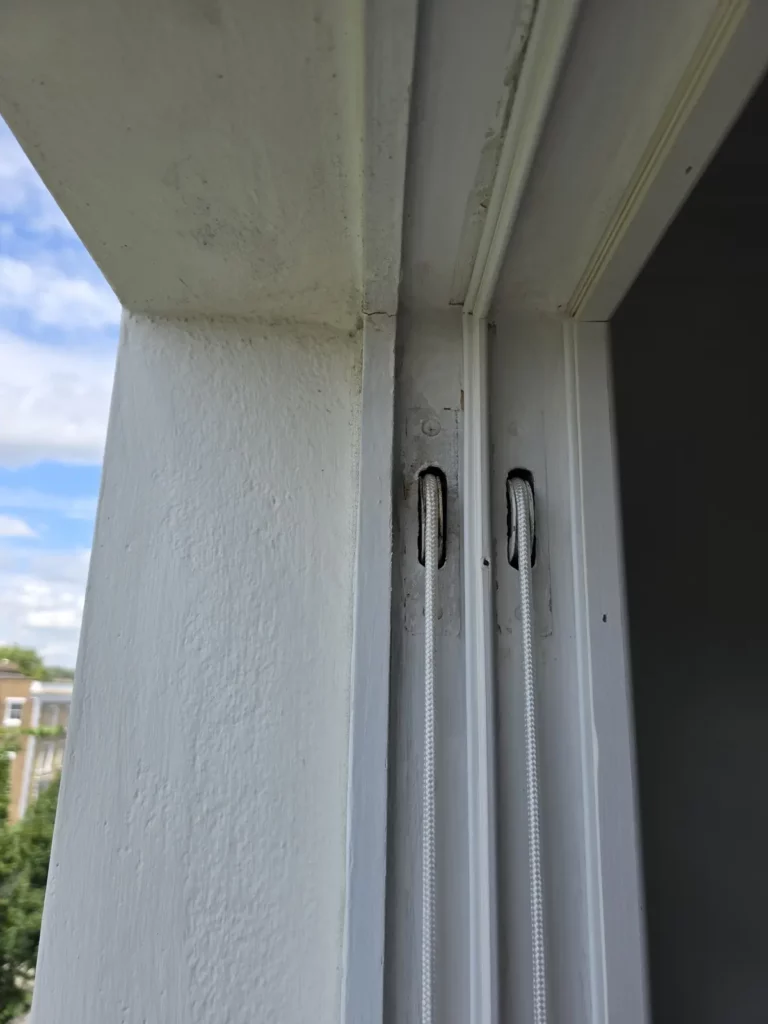
In a traditional box sash window, a cord runs over a pulley and connects the moving sash to a counterweight concealed inside the frame. A correctly matched weight offsets much of the sash’s weight, allowing it to move with control and remain open at the chosen height.
Each side works independently. If a cord breaks, slips or detaches, the sash can become heavy or uneven. If a pulley no longer turns freely, movement may feel rough. Modern ball-bearing pulley designs can make movement smoother where replacement is appropriate, but the rest of the system still needs to be correctly set up.
Common causes of a stuck, heavy or unbalanced sash window
Broken, frayed or detached sash cords
A failed cord removes some or all of the counterbalance. The sash may suddenly feel heavy, tilt, drop or refuse to stay open. Cords can also fray gradually where they pass over a worn pulley. The survey should confirm the condition on both sides and whether the weights and attachment points are sound.
Counterweights and heavier replacement glass
A weight may be missing, obstructed or incorrectly matched to the sash. Balance can also change after thicker or heavier glass is fitted. Repair A Sash explains glazing options in its sash window glass tutorial. A specialist can weigh the sash, check the pockets and adjust the counterweights where needed.
Worn or seized pulley wheels
A pulley that is stiff, damaged or badly aligned increases friction and may accelerate cord damage. The sash may move in jerks or produce scraping sounds. Cleaning, adjustment or replacement may help, depending on the pulley and the condition of the surrounding timber.
Paint build-up and moisture-related swelling
Repeated coats of paint can bridge moving edges or reduce the clearance in the sash channel. Timber can also swell after moisture exposure. The cause should be distinguished before material is removed: local easing may help, but failed coatings or an active moisture route also need attention.
Poorly fitted beads, seals or misalignment
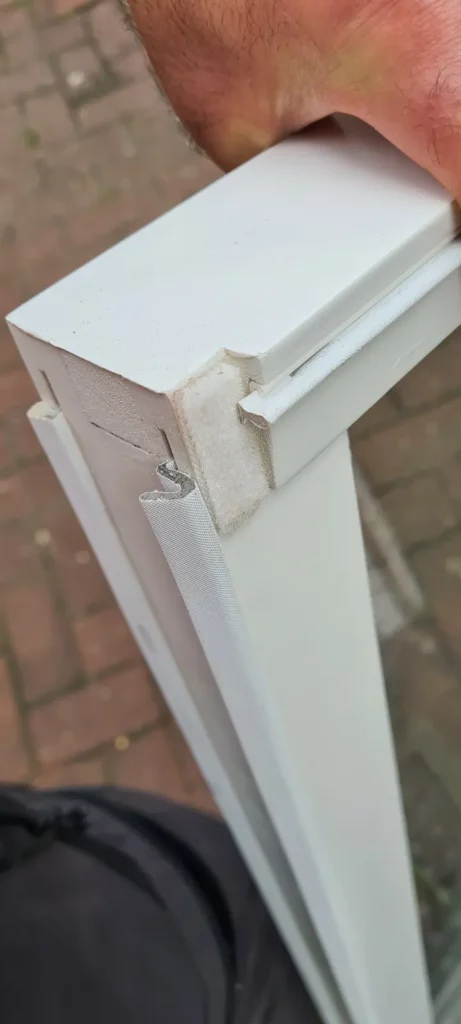
Parting beads, staff beads and draught seals guide the sash. If they are too tight, distorted or badly positioned, the window may bind. A sash can also rub because the frame has moved or earlier work left uneven clearances. Adjustment should preserve controlled movement without introducing unnecessary gaps.
Distortion, loose joints or decay
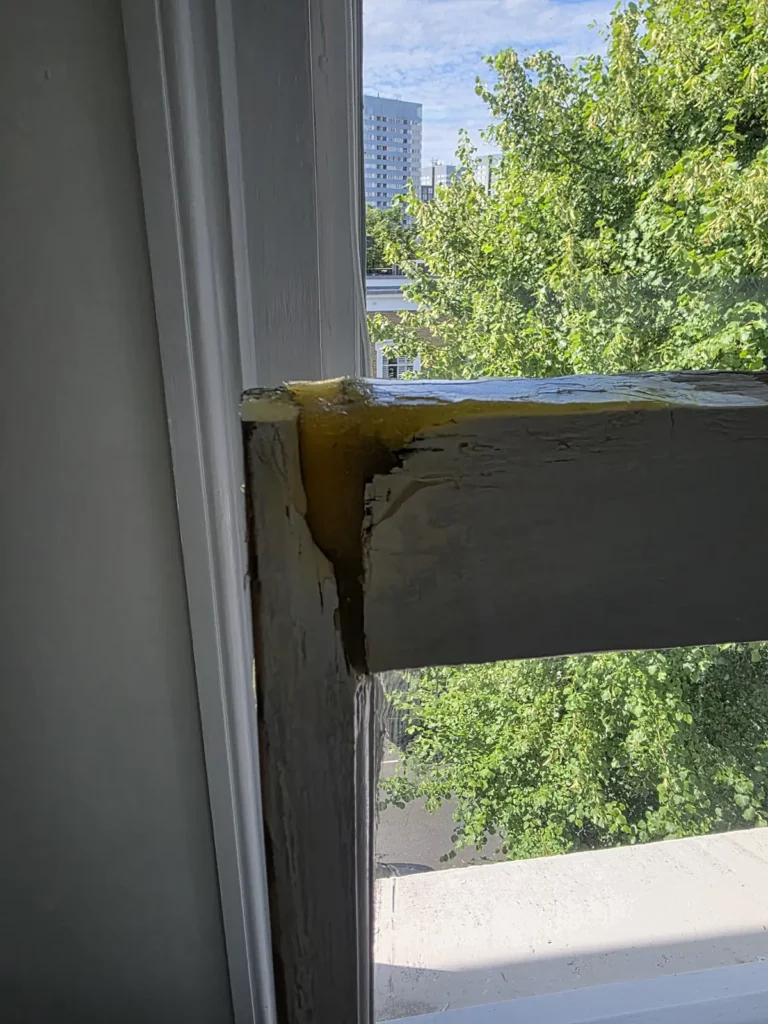
A distorted sash or loose joint can change the geometry enough to cause sticking. Local decay may weaken joints or affect the sill and box frame, although a stuck sash does not by itself prove rot. Our guide to hidden rot in sash windows explains what a proper inspection can reveal.
Does the window need repair or a fuller renovation?
A focused sash window repair may be enough when the main issue is a failed cord, pulley, isolated joint or localised timber defect. The repair should address the cause and restore safe, balanced movement rather than only freeing the sash temporarily.
A broader sash window draught proofing and renovation service may suit windows with several interacting issues, such as worn cords, loose beads, poor sealing, coating failure and general stiffness. If the timber condition is uncertain, see our guide to repairing or replacing timber windows.
What Repair A Sash checks during a survey
The aim is to connect the symptom with its cause and the least disruptive suitable remedy. Depending on access and the condition of the window, the survey may include:
- operating the sash carefully to identify sticking, uneven movement and loss of balance;
- checking cords, pulleys, weight pockets and the effect of the existing glass;
- inspecting beads, seals, channels and clearances for friction or poor fitting;
- looking for distortion, loose joints, coating failure, moisture routes and local decay; and
- considering whether a targeted repair or a fuller renovation is proportionate.
| REPAIR A SASH FIELD NOTE A sash that moves after the painted edge is cut free may still have an underlying balance or moisture problem. The useful diagnosis is not simply that the window was stuck, but why it became stuck and whether the fault is likely to return. |
What homeowners can check safely before a survey
Without dismantling the window, you can record a few details that help the first assessment:
- Note whether the problem affects the upper sash, lower sash or both.
- Check whether the sash moves a short distance, feels heavy or immediately drops.
- Look for a visibly loose or broken cord without pulling on it.
- Record whether sticking is worse after rain or during humid weather.
- Photograph paint build-up, gaps, staining or areas where the sash rubs.
Stop if the sash drops, glass is cracked, timber appears unstable or significant force is needed. Do not remove beads, open weight pockets or place fingers beneath an unsupported sash.
Heritage and planning context
In listed buildings and conservation areas, retaining and repairing original joinery is often preferable where it is technically viable. Requirements vary by property and scope, so confirm any consent implications before alterations. See our guide to sash windows in London conservation areas.
Arrange a free sash-window survey in London
If your sash window is stuck, heavy, dropping or refusing to stay open, Repair A Sash can inspect the movement, balance system and timber condition before recommending work. Contact Repair A Sash to arrange a free survey and quotation in London.
Frequently asked questions about stuck and unbalanced sash windows
A cord may be broken or detached, a counterweight may be missing or obstructed, or the weights may no longer match the sash. Friction can also affect movement. An inspection should check both sides before the window is used normally.
Usually, yes. Sash cords are serviceable parts and can often be replaced while retaining the existing sash and box frame, provided the surrounding timber and access points remain suitable.
A sudden change can follow cord or weight failure. It may also occur after glazing changes or if swelling and friction have increased. Avoid forcing the sash until the balance and movement have been checked.
Yes. If replacement glass increases the weight of the sash, the original counterweights may no longer provide the correct balance. The sash and weights can be assessed and adjusted as part of the work.
No. Paint build-up, swelling, tight beads, cord faults and misalignment can all cause sticking. Decay is one possible factor, but it should be confirmed through inspection rather than assumed from the symptom.
No. A dropping sash can trap fingers, damage glass or fall unexpectedly. Keep it closed if this can be done safely, do not rely on a temporary prop and arrange an inspection.
Reviewed by and sources
Reviewed by: Borislav Čakarević, Repair A Sash
Editorial preparation: Prepared from Repair A Sash’s technical material and service information, with independent conservation references listed below.
Last updated: 16 September 2026.