Timber sash windows do not have a fixed expiry date. A century-old window that has been protected from water and repaired when necessary may be in better condition than a much newer window that has been neglected. Age provides useful context, but it does not decide whether the window is sound.
At Repair A Sash, the starting point is the condition of the paint and putty, the joints, the sill, the bottom rail and the lower box frame. Those details show whether the window needs routine maintenance, a local repair or a more substantial intervention.
Quick answer: how long do timber sash windows last?
A well-made timber sash window can remain in service for many decades. Some original sash windows in London have already lasted well over a century, but that is not a promise about any individual window. Lifespan depends on timber and construction, exposure to weather, drainage, the condition of protective coatings and how quickly local defects are addressed.
There is no single lifespan or repainting interval that applies to every sash window. The more useful approach is to check the protective coating and putty before they fail, pay particular attention to lower sections and investigate changes in movement or moisture rather than waiting for a fixed date.
What affects the lifespan of a timber sash window?
The factors below matter together. A durable piece of timber can still deteriorate if water is repeatedly allowed into an open joint, while an exposed window can remain serviceable when its coating, putty and drainage details are kept in good condition.
| Factor | Why it matters | What to check |
| Paint and putty | They form the main weather barrier around timber and glass. | Cracks, flaking, open edges, failed putty and bare timber. |
| Exposure and drainage | Wind-driven rain, strong sun and water that does not shed cleanly increase stress on coatings and joints. | Exposed elevations, sills, blocked drainage paths and places where water lingers. |
| Timber and construction | Species, cut, grain, seasoning, joints and workmanship all influence durability. | Condition after preparation, open joints, distortion and evidence of earlier alteration. |
| Lower components | Sills, bottom rails and lower box sections receive the greatest concentration of weathering and splashback. | Paint failure, swelling, staining and local softness in lower areas. |
| Previous repairs | A sound repair can extend service life; a poorly detailed one may leave a moisture route unresolved. | Cracks around repair lines, recurring defects and the original source of dampness. |
| Inspection and maintenance | Early action usually keeps the affected area smaller and preserves more original material. | Changes in coating, putty, joints, movement and operation. |
| REPAIR A SASH INSPECTION NOTE The age of the window is context, not a diagnosis. The survey needs to establish where weather protection has failed and whether any deterioration is superficial, localised or structural. |
Why old timber sash windows can remain serviceable
Many original Victorian sash windows were made as repairable joinery: sashes can be removed, cords and beads renewed, and localised timber defects cut out and repaired without discarding the whole window. Historic England likewise recommends assessing repair before complete replacement where historic windows are involved.
Older windows may also contain well-seasoned timber that remains structurally useful beneath tired coatings. Close grain can be one helpful observation after paint is removed, but it is not proof of strength on its own. Timber species, cut, joints, moisture history, distortion and hidden defects all need to be considered.
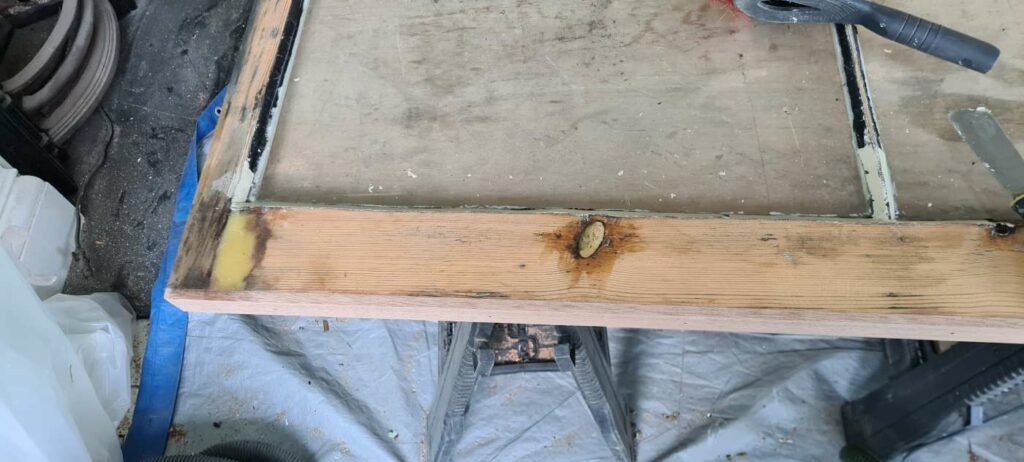
| REPAIR A SASH FIELD NOTE Layers of paint and surface cracking can make a sash window look worse than the timber below. The useful question is how far any decay extends and which components remain structurally sound. |
Why painting and putty matter
Paint is not only a decorative finish. Together with sound putty and well-detailed joints, it limits the amount of weather reaching the timber. Once coatings crack, lift at the edges or leave timber exposed, repeated wetting and drying can open small defects further.
A sheltered window may retain a sound coating longer than one exposed to strong sun or wind-driven rain. Product, preparation, colour, orientation and workmanship also affect performance, so a fixed repainting date is less reliable than regular condition checks. The SPAB sash window maintenance guidance is a useful independent reference for routine care.
| MAINTENANCE NOTE There is no universal repainting interval. Regular inspection is more useful than a fixed calendar date, and the life of a coating depends heavily on exposure, preparation, the coating system and the quality of the workmanship. |
Which parts often deteriorate first?
The lower parts often show the earliest weather-related deterioration because they receive run-off, splashback and repeated wetting. This is a common pattern, not a rule: leaks above the window, failed perimeter details or condensation can create different local problems.
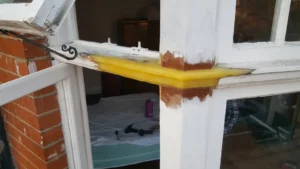
The sill is designed to shed water, while the bottom rail and lower sash joints sit close to the most exposed part of the opening. Paint and putty failure around these areas can let moisture reach end grain and joints. Lower box-frame sections also deserve attention, especially where water is not draining away cleanly.
| REPAIR A SASH FIELD NOTE A tired-looking top sash and a damaged bottom rail do not automatically mean the entire window has failed. Condition should be mapped component by component before a repair or replacement decision is made. |
Warning signs that maintenance may be turning into repair
No single surface sign proves that a sash window is beyond repair. The following changes justify a closer inspection because they can show that weather protection, movement or a previous repair is no longer performing as intended.
- Failed paint or putty. Flaking, cracking, open edges or bare timber allow weather to reach vulnerable surfaces and joints.
- Open joints or recurring cracks. Gaps at sash corners, repair lines or frame junctions may provide a route for water and can indicate movement.
- Moisture-related changes. Staining, swelling, local softness or a persistent damp area should be investigated, but appearance alone does not establish the depth or cause of decay.
- A change in operation. A sash that has become harder to move, closes unevenly or behaves differently after wet weather may be affected by swelling, paint build-up, distortion or another mechanical issue.
- Cord, bead, rattle or draught problems. Broken cords, worn beads, rattling and air leakage often need repair or overhaul, but do not by themselves prove structural failure.
- Recurring defects around earlier work. Cracks or moisture returning around a previous repair can indicate that the underlying water route or joint detail still needs attention.
Peeling paint on its own is usually a surface warning, not proof of structural decay. Minor rot may remain hidden until a suspicious area is gently tested during a professional survey; if the timber beneath has decayed, a suitable probe will enter with little resistance. More extensive decay is often visually apparent, but its full extent still needs to be mapped.
For a fuller explanation of that diagnostic process, see our guide to hidden rot in sash windows.
Homeowners should not use forceful probing that may damage otherwise sound painted timber. If the signs are persistent, a sash window repair inspection can establish whether the issue is coating failure, a mechanical defect or localised timber decay. Where the structure is sound but rattles and air leakage are the main problem, draught proofing and renovation may be the more relevant route.
What can happen when maintenance is delayed?
When failed paint or putty is addressed promptly and the timber remains sound, careful preparation and recoating may be enough. If moisture has reached a joint or end grain, the work may also need a local timber repair and correction of the water route before the finish is renewed.
Localised decay in a sill, rail or frame section can often be cut back and repaired while retaining the sound parts of the window. The SPAB technical note on repairing wood windows describes the principle of removing only the material required to form an effective repair.
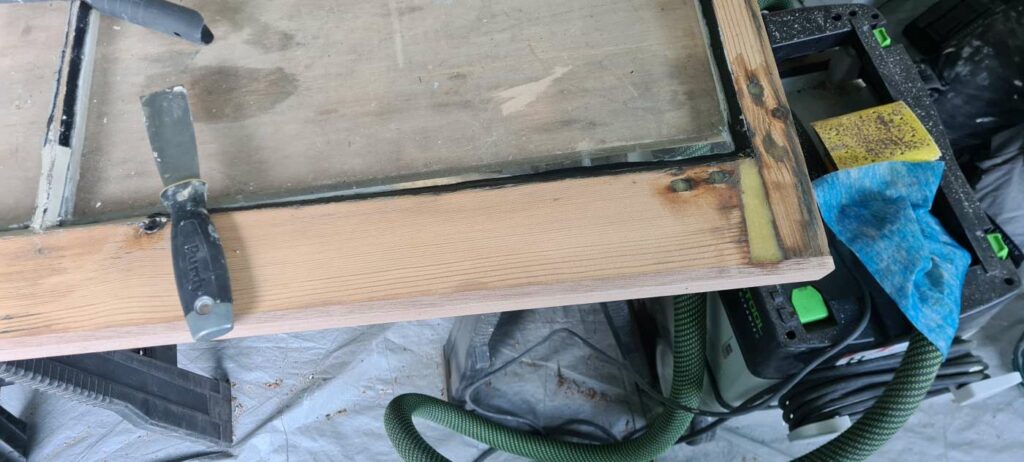
If the sashes are no longer a sensible repair prospect but the box frame is sound, new double-glazed sashes in renovated existing boxes may be an option. Where deterioration is widespread across both sashes and frame, full replacement may be more appropriate. The separate repair-or-replace guide explains that decision in detail; this lifespan guide does not duplicate it.
Earlier intervention generally preserves more original material and keeps more technical options open. The right step still depends on the actual extent and cause of the defect, not on a warning sign viewed in isolation.
Can sash windows be inspected or repaired from inside?
Traditional sash windows are designed to be serviced from inside. Repair A Sash can carry out the majority of sash-window repairs without scaffolding because the sashes can often be removed internally for cord, bead, glazing or joinery work. The exact method still depends on the window and the surrounding finishes.
Scaffolding or another external access or protection system may still be required when an external work area cannot be reached safely or pedestrians below need protection, particularly above a busy high street. This is assessed for each elevation and work package.
The full guide to what homeowners should expect during sash-window repair covers internal access, room preparation, external access and timescales in more detail.
| REPAIR A SASH PRACTICAL NOTE The majority of sash-window repairs can be organised from inside. Scaffolding may still be needed because of safe access or public protection, not simply because the window is above ground-floor level. |
Homeowner maintenance checklist
1. Check paint and putty periodically, and look again after severe weather or when a previously sound area changes.
2. Pay particular attention to the sill, bottom rail, lower sash joints and lower box-frame sections.
3. Look for open joints, recurring cracks, standing water or a detail that prevents the sill from shedding water cleanly.
4. Note any change in how the sash opens, closes, aligns or behaves after rain.
5. Do not ignore broken cords, loose beads, rattling or worsening draughts; these are repairable defects even when the timber is sound.
6. Avoid diagnosing the whole window from surface appearance or by pressing hard into painted timber. Arrange an inspection if moisture or decay is suspected.
7. Before changing glass, material, profile or appearance, check the property’s planning and heritage position. The London conservation-area guide explains the checks in more detail.
FAQ about timber sash window lifespan and maintenance
A well-made timber sash window can remain serviceable for many decades, and some original London windows have already lasted well over a century. The condition of the individual window is more useful than its age when deciding what it needs.
There is no universal interval. Exposure, preparation, coating system, colour and workmanship all influence performance. Inspect the finish regularly and plan work before cracking, open edges or bare timber allow water to reach the joinery.
The sill, bottom rail, lower sash joints and lower box-frame sections often show early weather-related defects because they receive run-off and splashback. Other moisture routes can create deterioration elsewhere, so the whole opening still needs checking.
No. Flaking paint shows that the protective finish needs attention; it does not prove that the underlying timber has failed. Preparation and inspection establish whether repainting alone is enough or whether a local repair is also required.
Often, when decay is localised and the surrounding timber is sound. The affected section may be removed and repaired while retaining the rest of the sash or frame. Widespread deterioration requires a broader repair-or-replacement assessment.
Not for most Repair A Sash repairs. Traditional sashes can usually be removed and serviced from inside. Scaffolding or another protection system may still be required when external access is unsafe or pedestrians below must be protected, particularly above a busy high street.
They can be, especially when the main frame and most components remain sound and defects are localised. A component-by-component inspection is more reliable than deciding from age or tired surface appearance alone.
Reviewed by and sources
Reviewed by: Borislav Čakarević, Repair A Sash
Last updated: 13 august 2026.
Independent references: