When a sash window starts sticking, rattling, letting in cold air or showing signs of rot, it is easy to assume there are only two choices: patch it up cheaply or remove the whole window. In practice, the decision is usually more nuanced.
A sash window is made up of several parts. The box frame, upper and lower sashes, cords, weights, beads, glass and painted timber can all be in different conditions. A window that looks tired from the outside may still have a sound frame, while another may appear acceptable at first glance but contain enough hidden decay to make repair poor value.
This guide explains how Repair A Sash approaches that decision in London homes: when repair is a sensible first option, when new sashes in the existing box frame are the better compromise, and when full replacement becomes the cleaner long-term answer.
Quick answer: should you repair or replace sash windows?
Repair usually makes sense when the box frame is sound, the rot is localised and most of the original timber is still worth keeping. New sashes may be the best option when the frame can stay but one or both moving sashes are too damaged. Full replacement is usually better when too much of the window would need rebuilding.
The most useful starting point is not the age of the window, but how much of it is still doing its job. A century-old timber sash window can sometimes be a better repair candidate than a much newer window that has been neglected, poorly patched or left exposed to water for too long.
Quick decision guide
| What the inspection finds | Best starting option | Why |
| Sound box frame, localised rot, worn cords, draughts or sticking sashes | Repair / overhaul | Most of the window is still worth keeping, so targeted work can restore function and slow deterioration. |
| Sound box frame, but one or both sashes are too far gone | New sashes in existing box frame | The fixed frame stays, while the moving parts are replaced or upgraded. |
| Rotten box frame, failed sashes, repeated poor repairs or more than roughly half the window needing replacement | Full replacement | Repair starts to become a rebuild, so a new timber sash window may provide better long-term value. |
| Listed building or conservation controls affect the external appearance | Confirm the consent position first | The technically preferred option may still have to follow requirements for materials, profiles and appearance. |
| Repair A Sash inspection note The question is not simply “Can this be repaired?” The better question is: which parts are still structurally worth keeping, and would a proper repair leave the homeowner with a window that supports the homeowner’s longer-term plans for the property? |
Expert view: what Repair A Sash checks first
On an initial sash window inspection, Repair A Sash first looks at the overall condition of the window: how it has been maintained, where water has entered, how much paint protection has failed and how far any decay has travelled into the timber.
The next step is to assess the box frame separately from the sashes. The box frame is the fixed outer structure built into the wall, while the sashes are the moving glazed sections. They do not always fail at the same time, so each needs to be judged on its own condition.
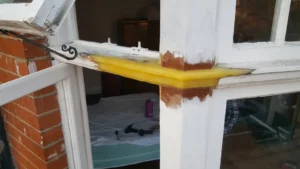
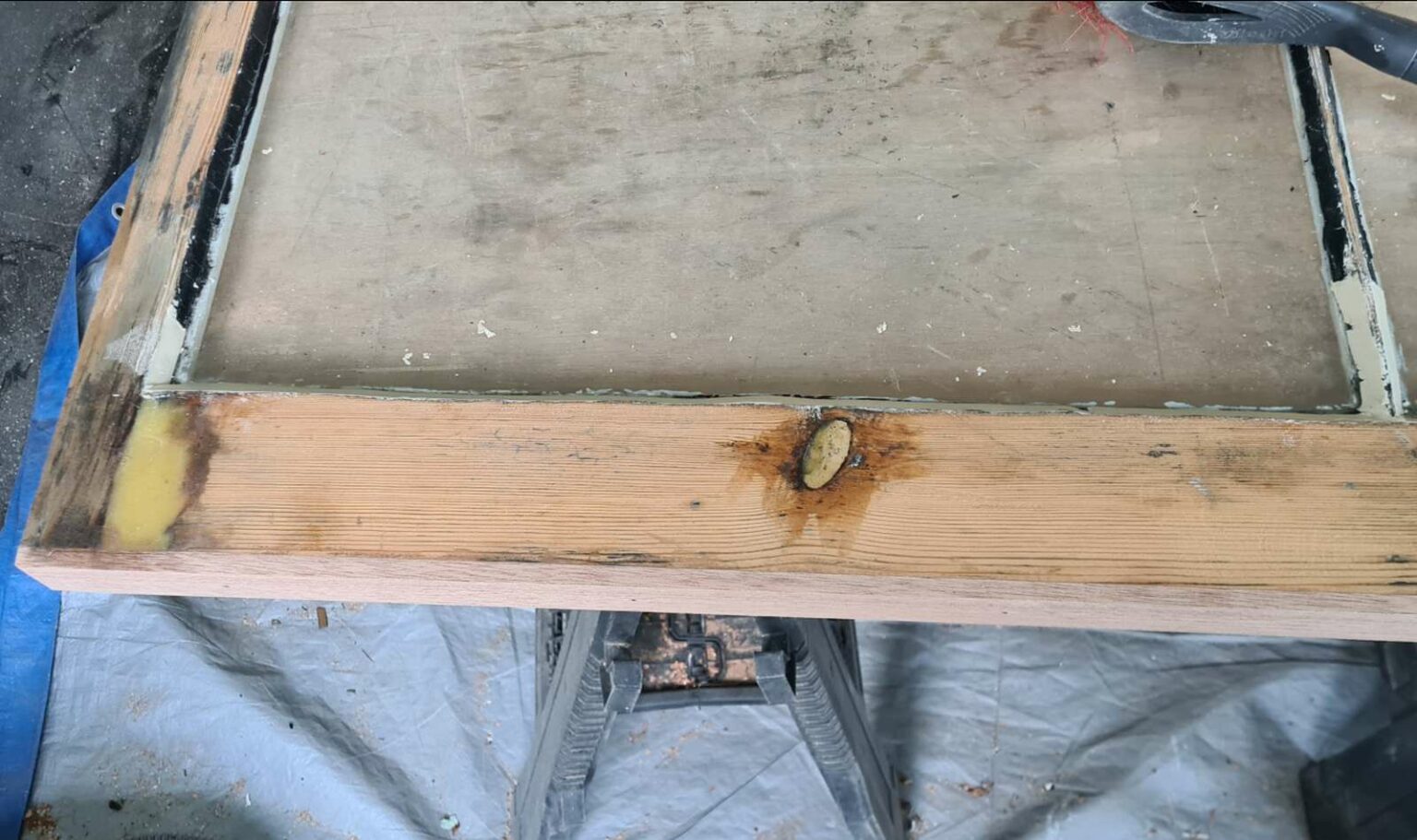
That distinction matters. A homeowner may see a blackened or soft lower sash rail and assume that the whole window is finished. If the surrounding timber and box frame remain strong, however, the damaged section may be cut out and repaired properly. On another window, the sashes may appear repairable while the box frame itself is too deteriorated to provide a reliable base.
Borislav’s practical rule of thumb is that if more than roughly half of the whole window would need to be replaced for the work to be completed properly, the financial argument for repair starts to weaken. It is not a rigid formula, but it is a useful inspection guideline.
Scenario 1: when sash window repair is usually the right first option
Sash window repair is usually the best starting point when the frame is still solid, the damage is localised and the main problems are operation, draughts, paint failure or limited timber decay rather than structural failure.
In practical terms, this often means windows with worn or broken sash cords, loose beads, rattling sashes, localised rot in a lower rail, failed paint, minor movement issues or draughts around otherwise serviceable timber. These faults can be frustrating, but they do not automatically mean that the entire window should be replaced.
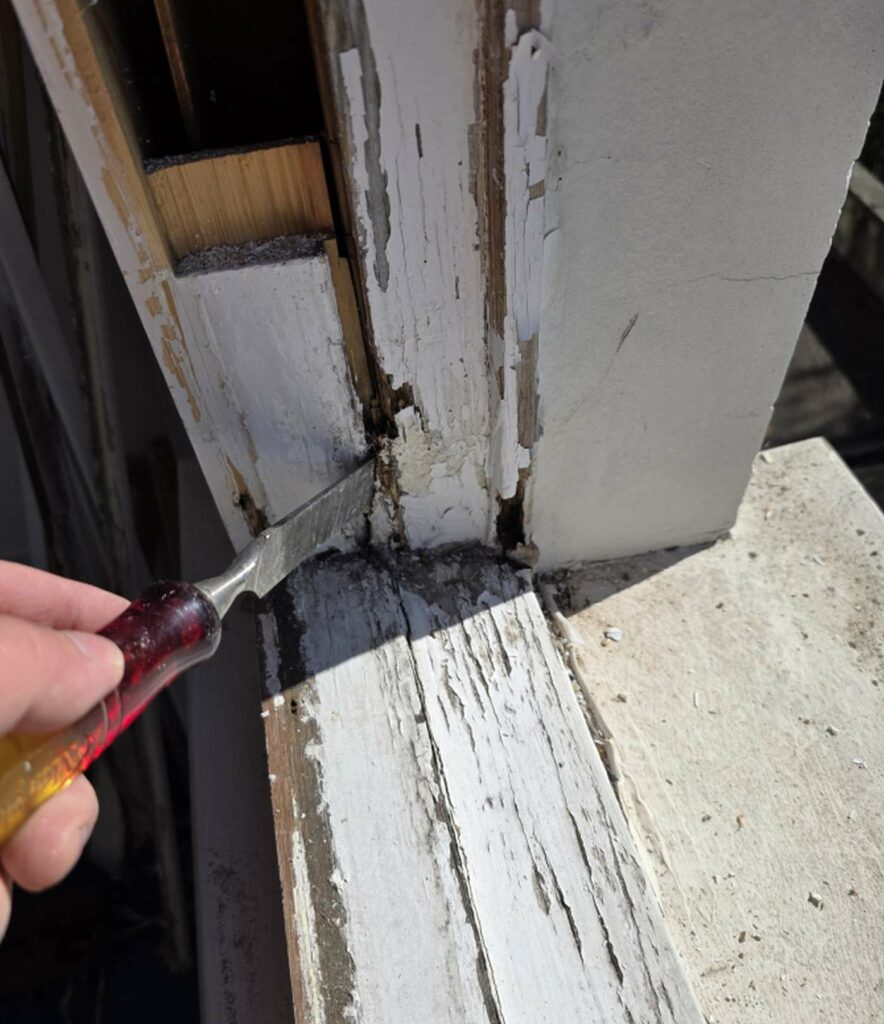
When a window is a suitable candidate, professional sash window repair in London is not a temporary patch. It can preserve sound timber, restore operation and prevent a limited defect from developing into more extensive decay.
Draughts are a separate but common part of the decision. A window can be structurally sound and still feel uncomfortable because of gaps around the sashes. In that situation, sash window draught proofing and renovation may be a more proportionate starting point than replacement.
Repair is also often the preferred route where original timber and period character matter. Some historic sash windows were made from slow-grown timber with a tight grain. If that material is still sound, removing it unnecessarily can mean losing a component that could have remained serviceable for many more years with appropriate maintenance.
For more detail on period features, timber condition and common restoration issues, see our guide to Victorian sash windows in London.
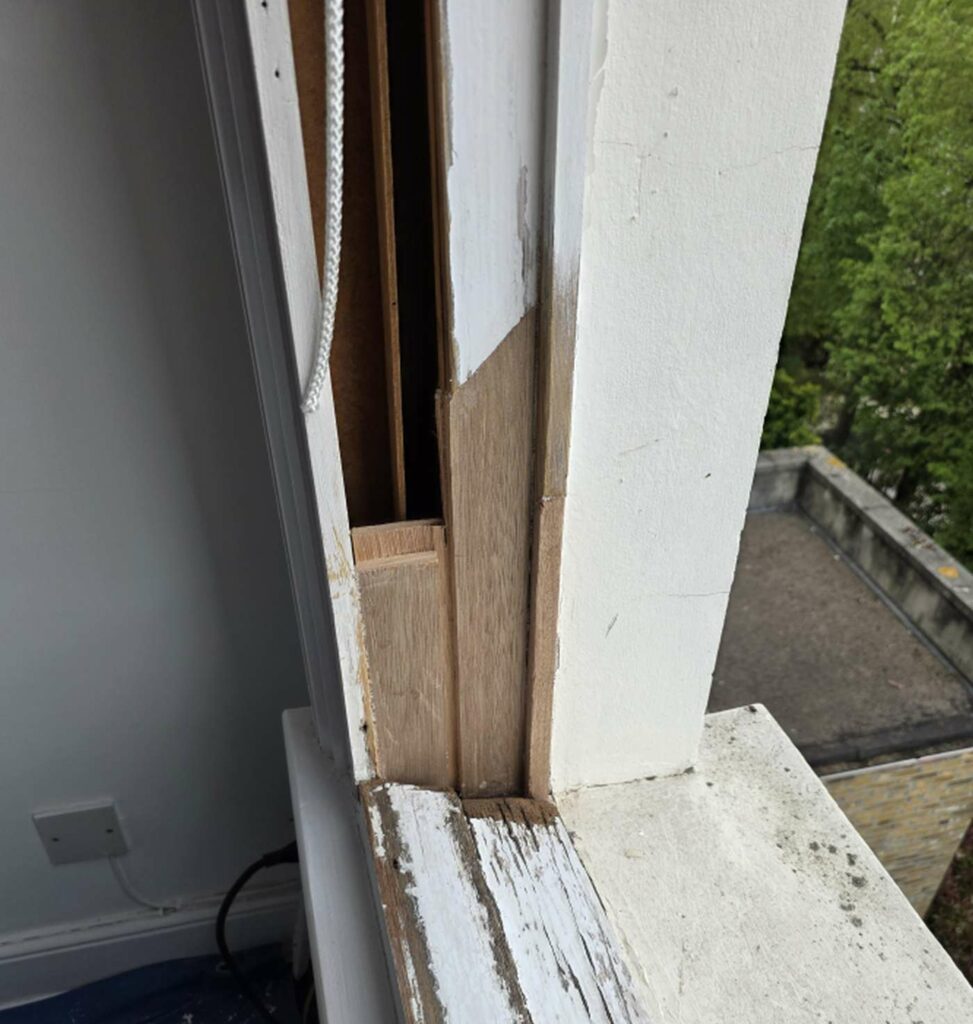
| Repair A Sash inspection note Some rot looks worse than it is. The surface can be dark or soft in one visible area, but the real decision depends on how far the decay has travelled and whether the surrounding timber remains strong. |
Scenario 2: when new sashes in the existing box frame make more sense
Replacing only the sashes can be the best compromise when the box frame is sound but one or both moving sashes are too deteriorated, distorted or inefficient to justify repeated repair.
This option is often overlooked because homeowners tend to think only in terms of repair or complete replacement. In reality, the fixed box frame and the moving sashes can often be treated separately. If the frame is strong and correctly positioned, new sashes can be made and fitted into it.
That normally causes less disruption than removing the whole window and can provide a more substantial improvement than a limited repair, particularly where both sashes are tired, swollen, distorted or no longer worth overhauling.
Depending on the property and specification, new sashes can also make a glazing upgrade possible. The dedicated service page on new double glazed sashes explains that option in detail. Glazing alone is not the whole performance story: the condition of the retained frame, fitting quality, draught proofing and the property itself all affect the result.
Replacing one sash is a different decision from replacing both. If one remains serviceable and the other has failed, it may be possible to manufacture only the failed sash, provided the appearance and operation can be matched properly.
A practical example: replacing one sash in a bay window
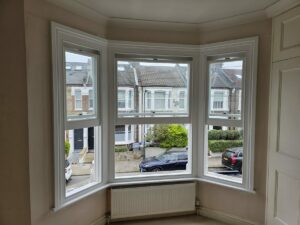
Repair A Sash inspected a single-glazed bay window made up of three separate sash windows joined together. The top sash in one side window had rotted and its meeting rail had failed, but the existing box frame and the rest of the bay remained suitable for retention.
A new single-glazed top sash was manufactured and fitted, together with new draught proofing. Because replacing the complete bay would have meant removing all three connected windows, retaining the sound components and replacing only the failed sash was substantially more proportionate. The same principle can apply to a single sash window whenever the box frame and remaining components are sound.
Scenario 3: when full sash window replacement is the better answer
Full replacement becomes the stronger option when repair would no longer be repair in any meaningful sense, but a costly rebuild of a window whose main components have already failed.
The clearest cases are windows where both sashes are in poor condition and the box frame is also rotten, distorted or unreliable. If the cill, stiles, joints, channels and surrounding timber of the box are failing as well, retaining the original window may no longer provide a dependable result.
Repeated poor repairs are another warning sign. A window that has been patched several times with mismatched materials, excessive filler or short-term fixes may no longer provide a sound base for another intervention. Paying to correct a sequence of earlier shortcuts can cost more than the homeowner expects.
A well-repaired original window can be an excellent solution, but no window can be patched indefinitely once too many components have failed. At that point, new sash windows may be the cleaner and more economical choice for the next phase of ownership.
A new sash window is normally supplied factory finished, so the comparison is not limited to the initial joinery work. Repainting after repair, making good around the opening and the likelihood of further interventions should all be considered when comparing the two routes.
Why photographs do not always reveal the full condition
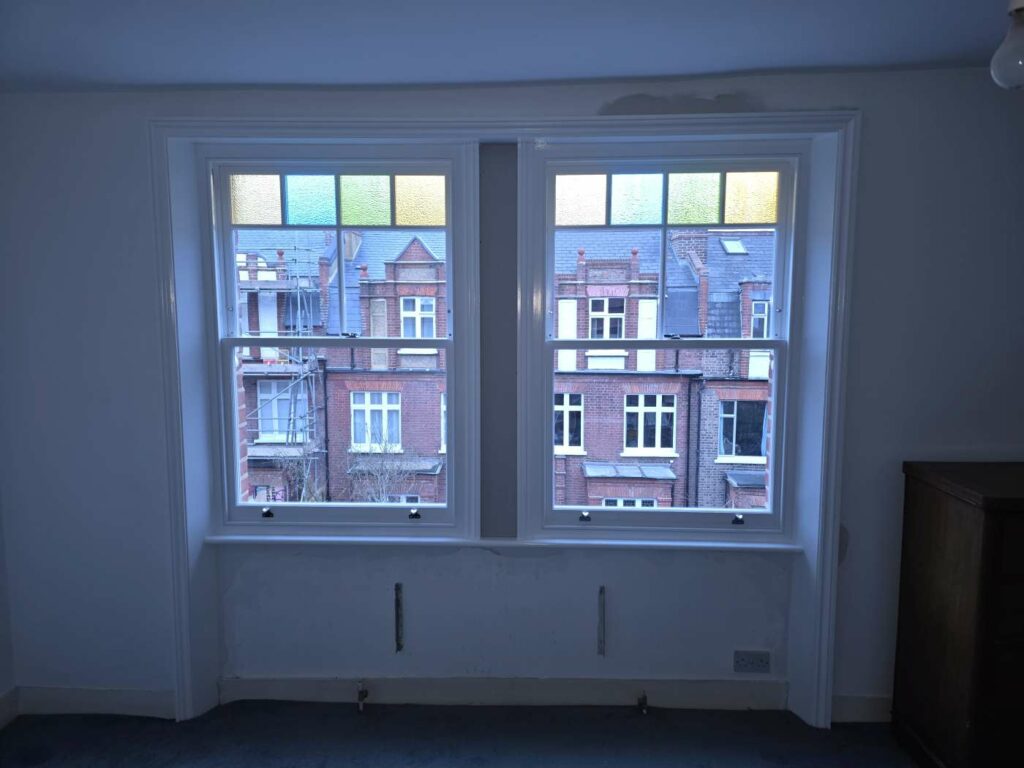
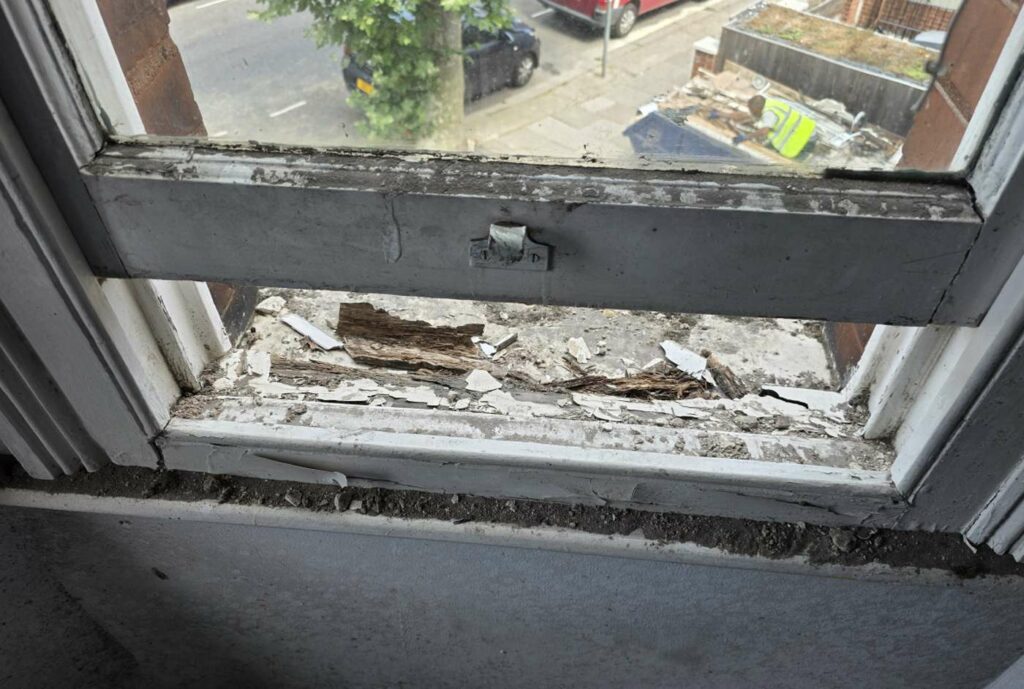
Clients often send photographs of a sash window that appears to be an economical repair candidate. In one typical terraced house, the window looked acceptable from the room and initially appeared repairable even at the beginning of the survey. A closer inspection revealed extensive dry rot and decay on external faces and less visible areas that had not been apparent in the photographs or from ground level.
Once the full extent of the damage was established, the original assumption changed and replacement became the more responsible recommendation. This is why a quotation based only on photographs may need to be revised after an on-site inspection.
For a closer look at this inspection stage, our guide explains why hidden decay may only become clear after controlled opening-up and how specialists define the repair boundary.
| Repair A Sash inspection note A low starting price for repair is not always the lowest cost over time. If the same window is likely to need more timber work, repainting and further attention soon afterwards, the apparently cheaper option can become the more expensive one. |
Listed buildings and conservation areas: check the rules before deciding
For listed buildings and some properties in conservation areas, the repair-or-replace decision is not only technical or financial. External appearance, materials, glazing bars, profiles and the method of replacement may be controlled. Historic England’s guidance on traditional windows explains why historic windows can contribute to the significance of a listed building and covers maintenance, repair, upgrading, replacement and consent.
Repair may therefore be preferred where original material can reasonably be retained. Where replacement is necessary, the new window may have to match the original design closely. The exact position depends on the building, the proposed work and the local planning authority, so consent should be checked before assuming that modern glazing, altered profiles or complete replacement will be acceptable.
For a planning-focused overview, see our guide to altering sash windows in a London conservation area.
The borough-specific position is explained separately in our guide to the Kensington & Chelsea window replacement rules.
A Grade II listed example from Belsize Park
At one Grade II listed house in Belsize Park, several sash windows were more than 50 mm out of square. Despite their condition, replacement was not accepted and the requirement was to repair and retain them. The case illustrates that the technically simplest option is not always available when the windows form part of the building’s protected historic character. Camden Council also publishes specific guidance for the Belsize Conservation Area, but every property and proposal still needs to be checked individually.
What affects the cost of sash window repair or replacement?
The cost of sash window work depends less on the label — repair, overhaul, new sashes or replacement — and more on what the inspection reveals and how the work must be organised. For that reason, Repair A Sash does not use a single price range as a reliable guide for every property.
- Window size and weight: Larger windows require more material and may need additional labour to handle safely.
- Scope of work: Changing cords is very different from a full overhaul, draught proofing and structural timber repair.
- Amount of decayed timber: Localised rot may be manageable, while widespread decay changes the economics of the job.
- Condition of the box frame: A sound frame leaves repair or new sashes open as options; a failed frame pushes the decision towards replacement.
- One sash or both sashes: Replacing one moving sash is not the same as replacing both, and neither is the same as replacing the complete window.
- Glass specification: Single glazing, slimline double glazing and vacuum glazing involve different specifications and may be restricted by the property.
- Access and scaffolding: Many sash windows can be worked on from inside, but dormers and difficult external positions can change access requirements.
- Protection and occupation: The amount of time needed to protect floors, furniture and occupied rooms can vary considerably, especially where somebody needs to continue using or sleeping in the room.
- Project size and sequencing: One isolated window is organised differently from a larger renovation involving several rooms or elevations.
- Repainting after repair: A repaired timber window may still need painting, while a new window will usually arrive factory finished.
- Making good around the opening: Replacement can involve plaster, reveals, brickwork or finishing around the window.
- Location and heritage requirements: Access, working conditions, local constraints and the need to match protected details can all affect the quotation.
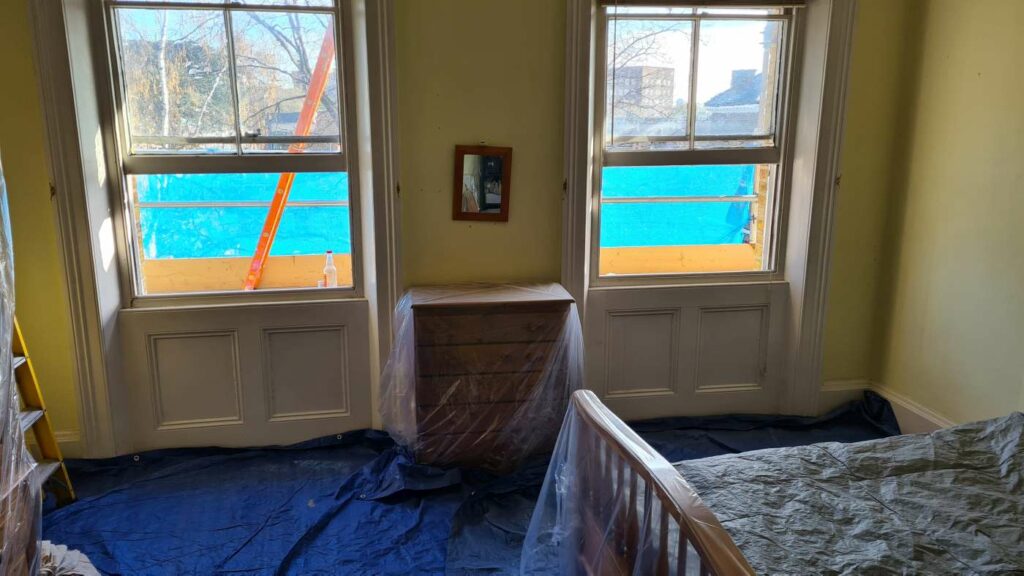
A meaningful quotation therefore needs to reflect the actual window and the circumstances of the property. Two apparently similar windows can require very different preparation, protection and working time.
How to compare repair and replacement value over time
Without pretending that one price range applies to every London property, the most useful comparison is by condition and likely future work. The table below shows how to think about value before a detailed quotation.
| Option | Typical starting condition | What it solves | Costs often missed | When it becomes poor value |
| Minor or moderate repair | Sound frame, localised issue, one clear fault | Restores operation and prevents a small defect spreading | Repainting, future maintenance and limited additional timber work | When the visible defect is only one part of wider deterioration |
| Overhaul with draught proofing | Sound frame, draughts, rattles, sticking and wear | Improves comfort, operation and everyday use | Repainting and scope expansion if concealed rot is found | When the structure is too deteriorated to justify an overhaul |
| New sash or new sashes in existing box frame | Frame sound, one or both sashes too damaged or unsuitable | Keeps the fixed frame while renewing the moving parts | Frame renovation, glazing choice and painting the retained box | When the box frame is also failing |
| Full replacement | Frame and sashes extensively deteriorated | Provides a new factory-finished window and a fresh structural start | Making good, higher initial cost and consent requirements | When most original timber is sound and a proper repair would preserve it well |
How long can repaired or new timber sash windows last?
Well-maintained timber sash windows can last for decades, and many historic London windows have remained in service for well over a century because they were regularly protected and repaired before deterioration became extensive. Maintenance matters more than age alone.
A repaired window does not become maintenance-free, and neither does a new one. Timber performs well when it is protected from water, checked before decay spreads and repainted before the coating fails completely.
There is no single repainting interval that suits every sash window. Exposure, elevation, orientation, the quality of the previous finish and the condition of the coating all affect when repainting is needed. More exposed windows should be checked sooner. The important habit is to inspect the finish regularly and renew it before water reaches the timber.
Repair, new sashes or full replacement: homeowner checklist
Before comparing quotations, the homeowner should consider the following questions. They do not replace an inspection, but they help clarify the decision.
- Is the box frame still structurally sound?
- Is the rot localised, or has it spread through the frame and both sashes?
- Do one or both sashes need replacing?
- Does the window mainly need cords, adjustment, draught proofing or paintwork?
- Has the window been repaired poorly before?
- Will a repaired window still need repainting afterwards?
- Is the property listed or in a conservation area?
- Is the priority the lowest initial cost, original character, greater comfort or a longer-term upgrade?
- Would more than roughly half of the whole window effectively need rebuilding?
If the answer to the final question is yes, full replacement should be considered seriously rather than dismissed as an unnecessary upsell.
FAQ about repairing or replacing sash windows
Repair normally has a lower initial cost when the frame is sound and the damage is limited. Replacement can provide better value when repair would involve rebuilding much of the window, repainting afterwards and returning for further work in the near future. The property, access and working conditions also affect the final quotation.
Sash windows are usually beyond economical repair when both sashes and a significant part of the box frame have failed. A useful practical guideline is that if more than roughly half of the whole window needs replacing, repair may no longer make financial sense.
Yes. Rotten timber can often be repaired when the decay is localised. The damaged material can be cut out and replaced, but the surrounding timber and frame must still be strong enough for the repair to provide a durable result.
Yes, in many cases. When the box frame remains structurally sound, one or both new sashes can be manufactured and fitted into it. This can provide a larger upgrade than a minor repair without the disruption of removing the complete window.
There is no universal interval. The timing depends on exposure, elevation, orientation, the previous paint system and the condition of the coating. Windows should be inspected regularly and repainted before cracks or failed paint allow water to reach the timber.
Original appearance, materials and details often need to be retained or closely matched, but the exact requirement depends on the building, the proposed work and the local planning authority. The listed building consent or planning position should be confirmed before replacement is assumed to be acceptable.
Not usually. Many sash windows can be serviced from inside the room. Scaffold or other access equipment may be required for some external repairs, dormer windows or difficult upper-level positions.
No. A well-repaired original timber sash window can be an excellent solution when its main structure is sound. A new window becomes the better option when too many components have failed and repair would be closer to rebuilding than restoration.
Reviewed by / sources
Reviewed by: Borislav Čakarević, Repair A Sash. Editorial preparation: Public Image.
Last updated: 27 July 2026
Sources: Borislav Čakarević expert review; Historic England — Traditional Windows; Camden Council — Belsize conservation guidance.